Historical Journeys
Greece is not discovered only through the remains of Antiquity
Greece is not discovered only through the remains of Antiquity
It can also be read through its Byzantine churches, monasteries, rural chapels, sketes and sanctuaries, scattered across cities, villages and some of the country’s most remote landscapes. These monuments are not merely witnesses of a bygone era. Many are still living places, where the liturgy continues to be celebrated, where people pray, and where monastic communities preserve ancient traditions. It is precisely this continuity between architecture, art and faith that gives them such a special place in the journeys offered by Hagiotopia.
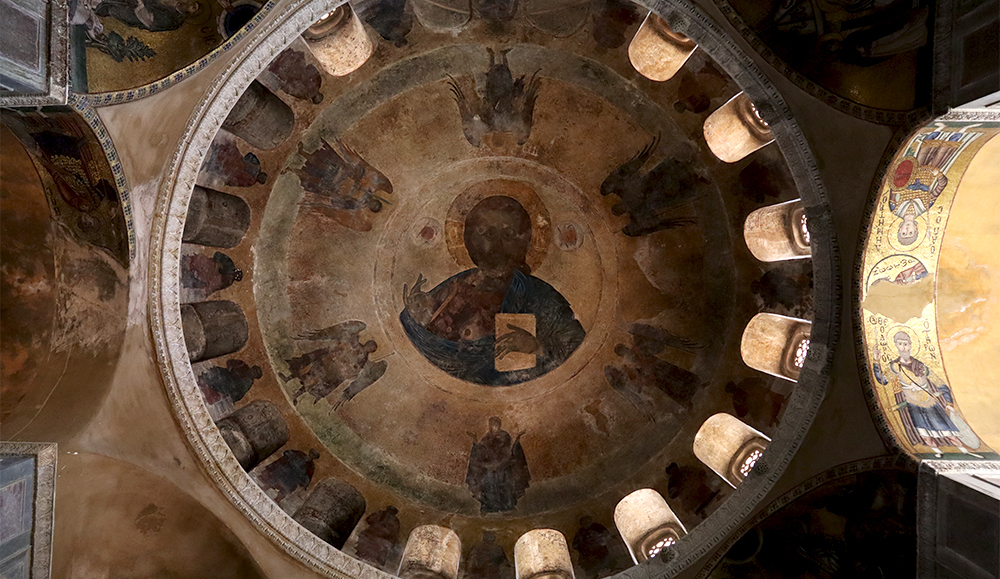
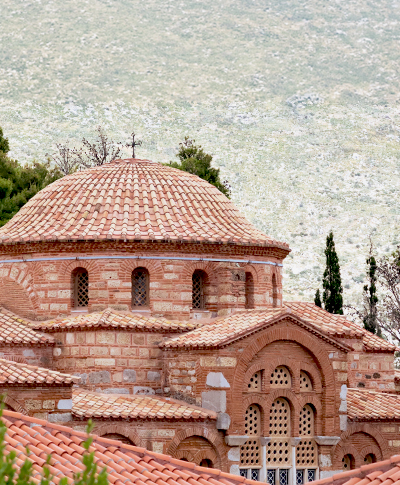
The Byzantine and post-Byzantine periods left Greece with a remarkable heritage
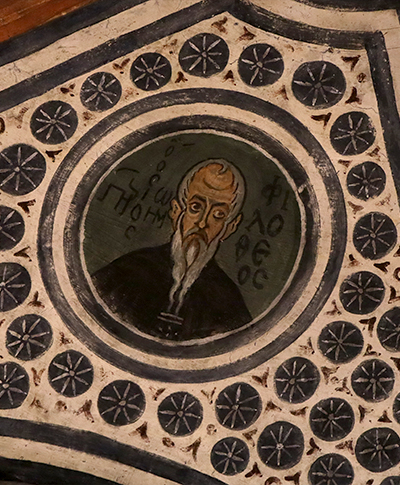
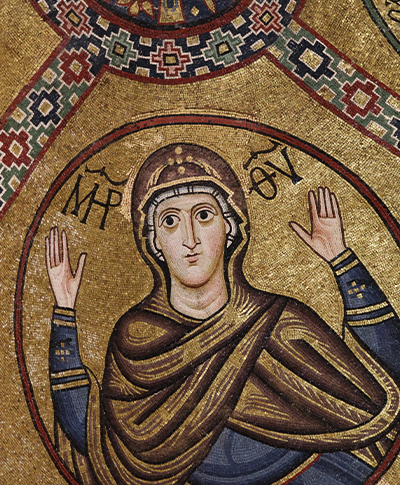
Cathedrals, monasteries, frescoes, mosaics, iconostases and icons form a whole in which art cannot be separated from the worship that gave birth to it. To observe a Byzantine fresco or mosaic is therefore not simply to admire a work of art. It means understanding its language, its place within the building, its relationship with the liturgy, and also its connection with those who, for centuries, have stood before it in prayer. Sacred imagery was never conceived as mere decoration : it accompanies the gaze, prayer and memory.
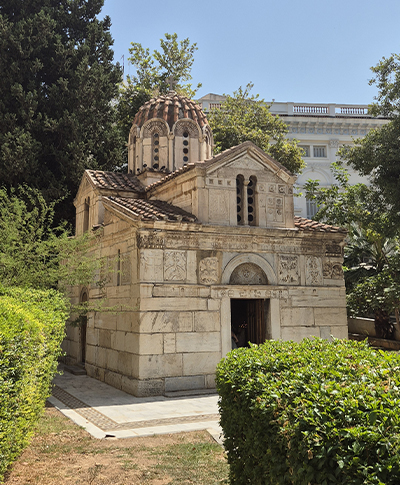
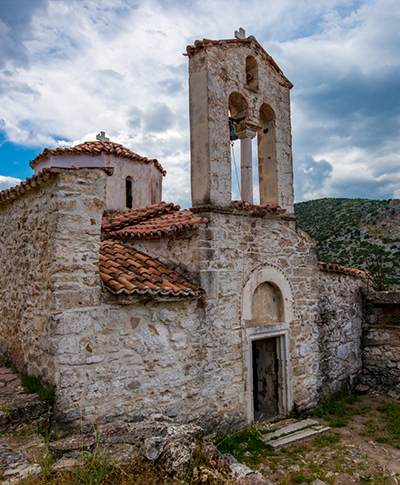
A different way of looking
Hagiotopia invites travellers to go beyond a purely tourist perspective. To visit a Byzantine monument is to take the time to observe its architecture, its proportions, its light and its sacred representations, but also to understand the human and spiritual history of which it is a part.
Through these places, an essential dimension of Greek history is revealed: that of a land where religious traditions, art and culture have remained deeply intertwined over the centuries. From major monastic complexes such as the Meteora to small village chapels, each building tells this story of continuity in its own way. Greece’s Byzantine heritage is not limited to its most famous monuments or to the major pilgrimage destinations. It is also found in quieter, more secluded places, where ancient frescoes, icons, local traditions and gestures of devotion still survive.
Monasticism also holds a central place in this history. The source text highlights how Greece’s great monastic communities, particularly Mount Athos and Meteora, are at once places of prayer, remarkable architectural ensembles and custodians of an exceptional heritage of manuscripts, icons and traditions.
Through these places, an essential dimension of Greek history is revealed: that of a land where religious traditions, art and culture have remained deeply intertwined over the centuries. From major monastic complexes such as the Meteora to small village chapels, each building tells this story of continuity in its own way. Greece’s Byzantine heritage is not limited to its most famous monuments or to the major pilgrimage destinations. It is also found in quieter, more secluded places, where ancient frescoes, icons, local traditions and gestures of devotion still survive.
Monasticism also holds a central place in this history. The source text highlights how Greece’s great monastic communities, particularly Mount Athos and Meteora, are at once places of prayer, remarkable architectural ensembles and custodians of an exceptional heritage of manuscripts, icons and traditions.
Sacred places before monuments
This approach also requires a certain form of respect.
A church or monastery is not an ordinary museum. Opening hours, silence, dress codes, photography and, more broadly, the behaviour expected of visitors are all connected to the sacred nature of the place and to the lives of those who inhabit it or come there to pray.
For Hagiotopia, discovering a Byzantine monument therefore means accepting the need to slow down. To look before taking a photograph. To understand before moving on. To take the time to perceive what the architecture, the frescoes, the light and the silence still have to tell us today.
A church or monastery is not an ordinary museum. Opening hours, silence, dress codes, photography and, more broadly, the behaviour expected of visitors are all connected to the sacred nature of the place and to the lives of those who inhabit it or come there to pray.
For Hagiotopia, discovering a Byzantine monument therefore means accepting the need to slow down. To look before taking a photograph. To understand before moving on. To take the time to perceive what the architecture, the frescoes, the light and the silence still have to tell us today.
Because to discover Byzantine art in Greece is to enter a world where beauty was never conceived for its own sake : it accompanies prayer, carries history and gives form to the sacred.
.